
“Beginner” is not a word to be ashamed of. It is simply the starting point and then, let’s talk about it, do you remember how good it feels to do something for the first time?
That feeling of discovery, of novelty, of not knowing what to expect, that fills you with curiosity and excitement.
Yet when you start looking for information about hiking trails, you are confronted with “130 km in 5 STAGE” and think, “But I on mountain hikes am always the last to arrive. How do I do that?”
Don’t worry. Getting started is easier than you think, and above all, training is not the discriminating factor that prevents you from starting. Sure, being fit helps, but the difference between those who walk (and complete) a path and those who never start lies in choosing the right path for your level and your needs or preferences.
And that is exactly what we are going to do together!
Here are 5 paths from which you can start, never to stop “collecting” itineraries and memories.
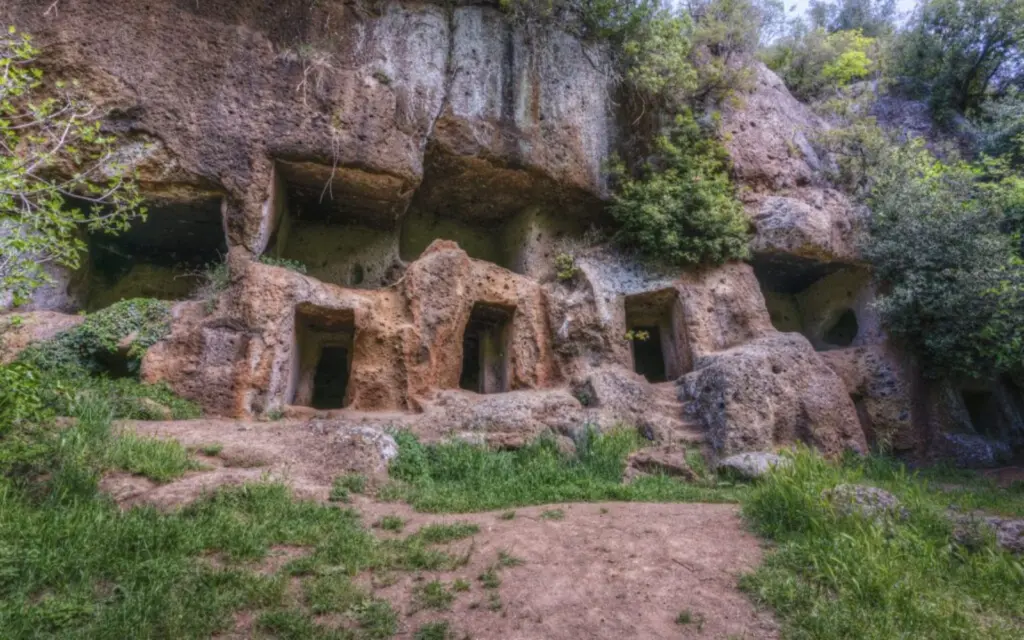
The Cammino dei Tre Villaggi
Region: Latium
Length: 18 km
Stages: 3 (can also be done in one day)
Start and finish: Villa San Giovanni in Tuscia (VT)
If the idea of walking for days still scares you, this is the walk that takes away all excuses.
Eighteen kilometers, doable in a day or divisible by sleeping in one of the villages that crosses the path.
The Cammino dei Tre Villaggi is the shortest walk in Italy, yet it has the credential and testimonium like the great Italian and European walks.
And that’s exactly what makes it perfect for getting started, because if you’re afraid of jumping in for a whole week without knowing if you’ll like it, here you have the chance to experience the full experience in a weekend.
And most importantly: you still have to organize yourself mentally, handle logistics and prepare your backpack.
You’ll notice whether it’s 18 km or 130 km, the essentials to take with you are still the same: technical clothing, powerbank, walking sticks, flashlight, first aid kit, documents, right shoes. What changes is the spare clothing. So by walking this path, you also “train” yourself to understand what you really need and what you can leave at home.
When can you go? We recommend either spring or fall and advise against summer, however, because the summer heat in Latium is a bit heavy.
Discover the Cammino dei Tre Villaggi!
The Cammino di Oropa della Serra
Region: Piedmont
Length: 62 km
Stages: 4 (or 3 for the more trained)
Departure: Santhià (VC)
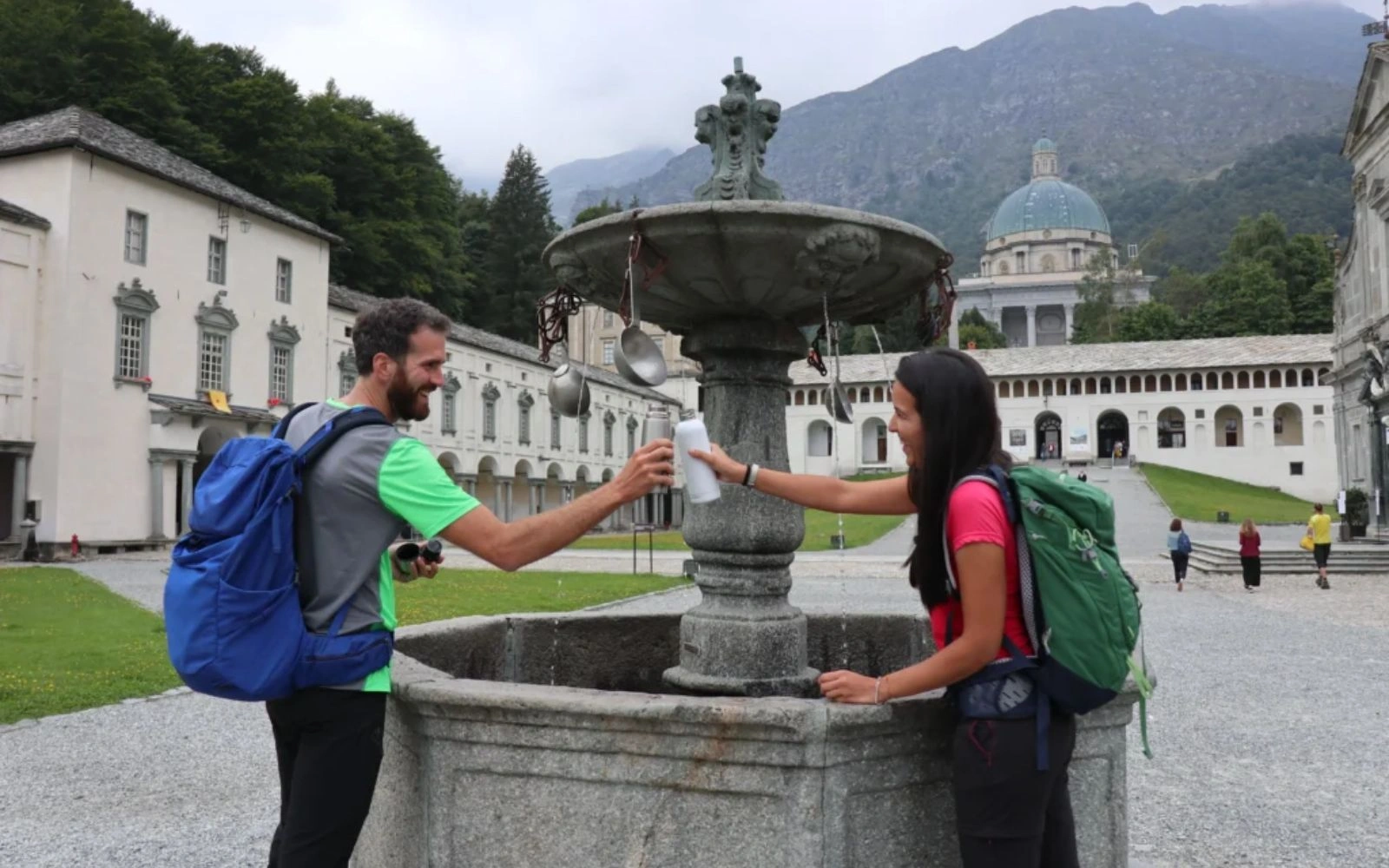
Arrival: Sanctuary of Oropa (BI)
Many call it “the training path” for a specific reason: it is easy to reach by public transportation, it has accommodations even at low cost, it is very well organized and marked, and the stages gradually increase in difficulty.
You start with 16.5 kilometers and 230 meters of elevation gain, and then arrive at the fourth STAGE with 15 kilometers, but 800 meters of climbing.
Your body has three days to get used to it before tackling the toughest stage-this means you can leave even if you are not particularly trained.
In the end, if you think about it, for a person with no particular health problems, an average of 15 km a day can be done comfortably, going at one’s own pace. They are more a matter of mindset and consistency than physical fitness.
And by the time you get to the final STAGE to the Sanctuary of Oropa, you will have figured out how your body works, what hurts, when to take the right breaks, how fast you go, how to manage your days on the trail. And perhaps, you’ll be ready to tackle even longer or more challenging walks in the future.
The route crosses the agricultural plain with Vercelli’s rice fields, the moraine hills and the Biella Alps. Four days that take you from 180 meters to 1,145 meters above sea level.
Walkable in all seasons, but spring and autumn are the perfect seasons. Even in summer it is doable because much of the route is in the shade (except for the first STAGE, from Santhià to Roppolo).
In winter, however, it is only passable in three STAGES because the facilities in Sala Biellese and Torrazzo are closed during this season.
Discover the Cammino di Oropa della Serra!
The Cammino dei Borghi Silenti
Region: Umbria
Length: 90 km
Stages: 5
Start and finish: Tenaglie (ring)
Ninety kilometers loop in southwestern Umbria, in the Amerini Mountains. Five STAGES passing through medieval villages where mass tourism has not yet arrived.
The silence here is real because you walk among virtually untouched, sparsely inhabited villages where life flows with rhythms that seem to have stopped decades ago. And that’s really the beauty of it!
Stages average 18 km per day, with manageable elevation gains. It is not a flat walk, but absolutely doable even for beginners.
If you are looking for a path where you really disconnect, where slow living is not a slogan but a necessity… this is the right path!
To walk it, spring and autumn are ideal. The Umbrian summer can be hot.
Discover the Cammino dei Borghi Silenti!
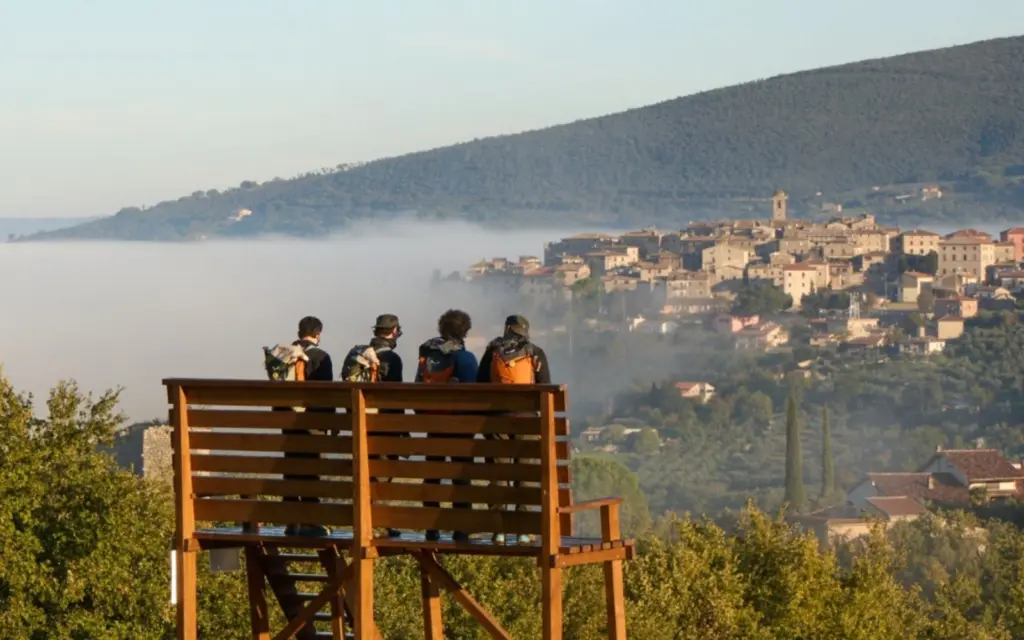
The Via degli Dei
Region: Emilia-Romagna and Tuscany
Length: 130 km
Stages: 5 or 6
Departure: Bologna
Arrival: Florence
The Via degli Dei is probably the most famous path in Italy after the Via FRANCIGENA. And there’s a reason for that!
Five STAGES of about 25 km each, covering one hundred and thirty kilometers connecting two of Italy’s most beautiful cities-Bologna and Florence, following in part the ancient Roman road Flaminia Militare.
Let’s start, however, by saying that the Via degli Dei is not a walk! There are challenging climbs such as Monte Adone, the STAGE between Madonna dei Fornelli, Monte di Fò and Monte Gazzaro. The elevation changes are significant and the knees work hard, especially on the descent.
It does have some important advantages for beginners, though: the signage is excellent (CAI white-red plus specific trail markers), there are well-distributed accommodations, detailed guides, and the GPS track is available in several free apps, such as the one from Cammini d’Italia.
Most importantly, you will meet so many other walkers, and in the toughest moments you will always have someone to chat with.
As a first walk, consider doing it in 6 STAGES, instead of 5, to spread out the distances better. And start in spring or fall, even in summer is doable but it’s so hot.
Learn more about why the Via degli Dei can be a good path to start!
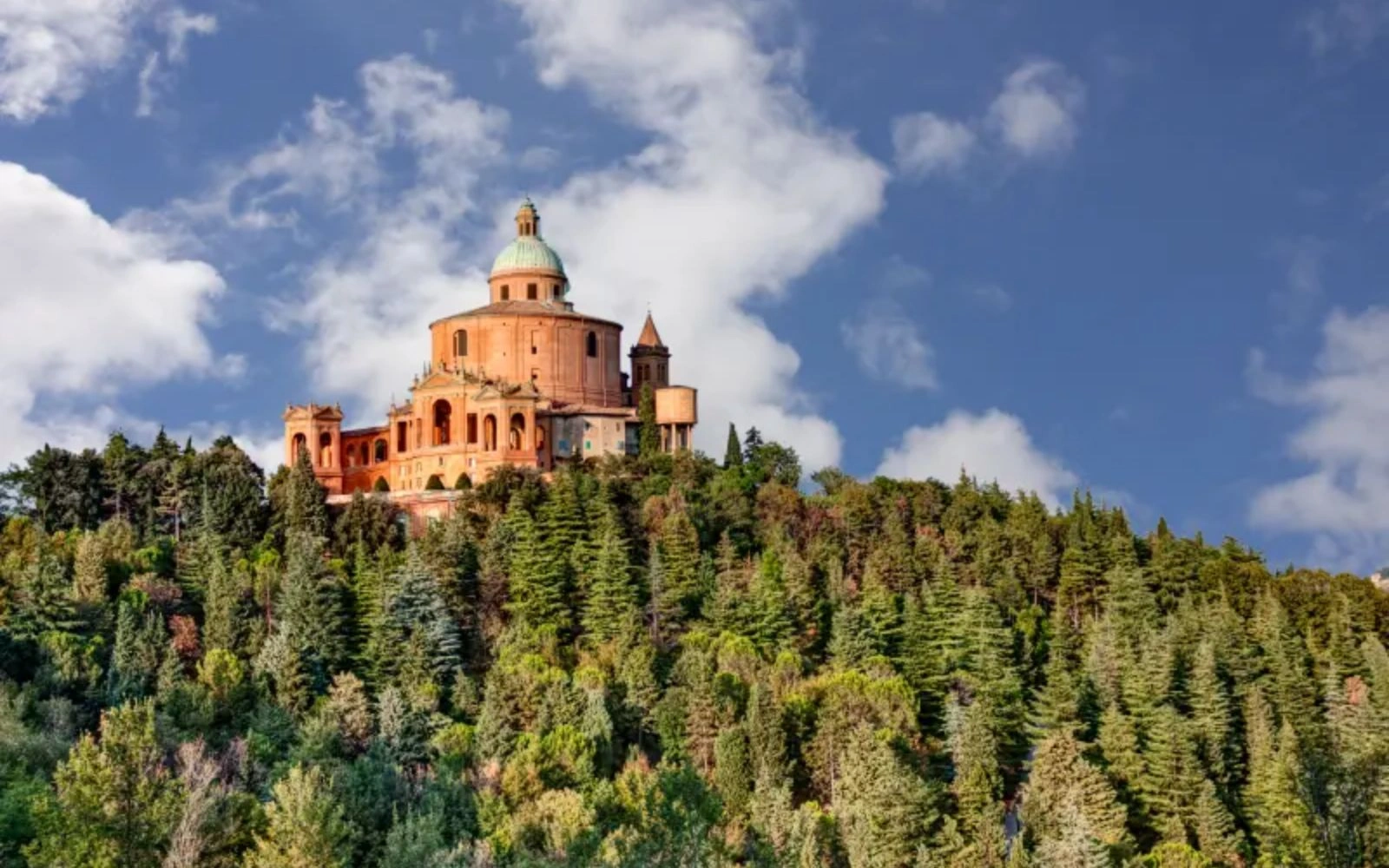
The Via Peuceta – Cammino MATERANO
Region: Apulia and Basilicata
Length: 166 km
Stages: 7
Departure: Bari
Arrival: Matera
From the Basilica of St. Nicholas in Bari, to the Sassi of Matera. 166 kilometers through inland Apulia: centuries-old olive trees, farms, medieval villages such as Bitetto, Cassano delle Murge, Santeramo in Colle, Altamura.
The STAGES are longer than the paths we mentioned before (here the daily kilometers are about 24 on average), but the elevation gains are manageable, as they are around +300 meters of positive elevation gain. Thus, one walks on mostly flat terrain or with gentle climbs.
July and August are not recommended because it is quite hot, but spring and autumn are perfect, even in winter it is feasible because the temperatures remain mild.
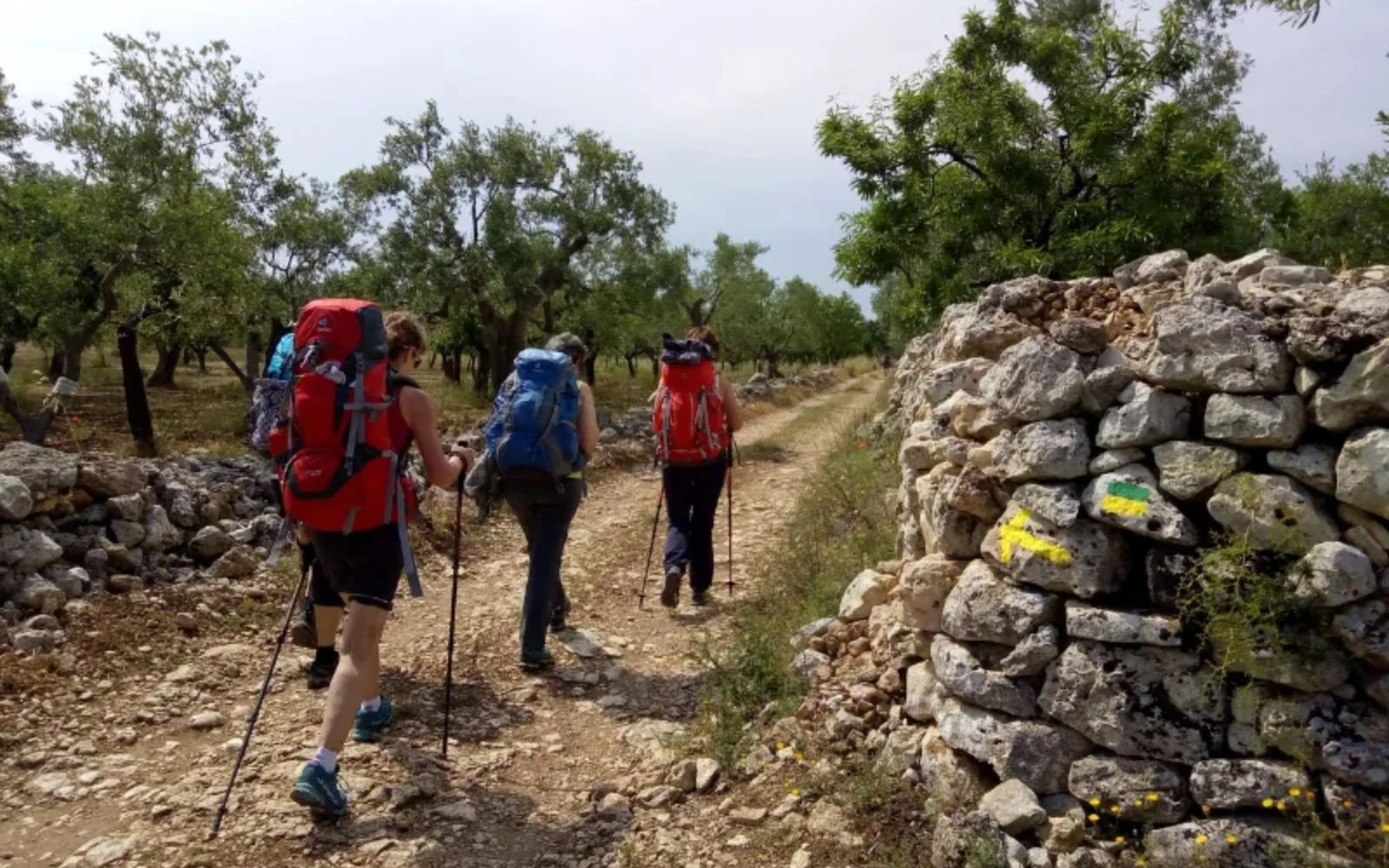
Which path to choose to begin with
If you’ve come this far and are still undecided, here’s a recap that will clear your mind a bit!
If you only have a weekend or want to test whether you like the walk without committing too much, the Cammino dei Tre Villaggi is the one. Eighteen kilometers total, full experience with credential and testimonium. You can have a good experience and decide whether to replicate it in longer walks.
If you have 4-5 free days and are unsure of your fitness, the Cammino di Oropa della Serra Is designed just for you. The STAGES increase in difficulty gradually, so your body gets used to it day by day. And the logistics/organization is simple: transportation, walker services, reasonably priced facilities, great signage and lots of online information.
If you have a week and want to be in nature without tourists, then opt for the Cammino dei Borghi Silenti in Umbria, however, consider that services to walkers are less frequent than on the more beaten paths. We recommend that you purchase the printed guidebook to better prepare yourself before you set out.
La Via degli Dei is for those who have a week and are not afraid to toil. The elevation changes are there, your legs will feel it, but you have the security of finding services and accommodations everywhere and plenty of other walkers to share the experience with.
La Via Peuceta is perfect if you want longer STAGES, but without big climbs, and if you can start when it is not too hot.
You will be able to explore “peasant and pastoral Apulia,” far from the beaten tourist routes, discovering villages and genuine products: handmade orecchiette, Bari focaccia, Altamura bread… after a day of walking, you can’t ask for better!
What you need for your first walk
During every walk always remember this, “less is more.” Broken-in hiking shoes (never new shoes on your first walk, because otherwise you’ll get blisters), a backpack that fits your build and (possibly) doesn’t exceed 15% of your body weight, layered technical clothing, powerbank, basic first aid kit, and so on.
But, after miles and miles milled along Italian and foreign paths, we can confidently tell you that the most important preparation is not about (only) equipment.
It’s about knowing what’s really in store for you along the way: how to pack your backpack smartly, how to plan your trip, how to handle logistics, or how to handle blisters when they come, what to do if it rains, how to organize your STAGE, where to get water, how accommodations along the way work, and more.
That is why we wrote the “Guide to the First Walk“: a practical book that answers all the questions you have before you set out and the ones you don’t know you have yet. Written by people who really do the walks, with honest and practical advice.
Page by page, step by step, we learn how to plan a journey in which setbacks and difficulties do not get in the way of our experience, whatever it may be: spiritual, cultural, physical well-being and immersion in nature.
Discover the Guide to the First Walk!
It only remains for us to wish you the best of luck on your first walk, with the hope that it will be the first of many 😉