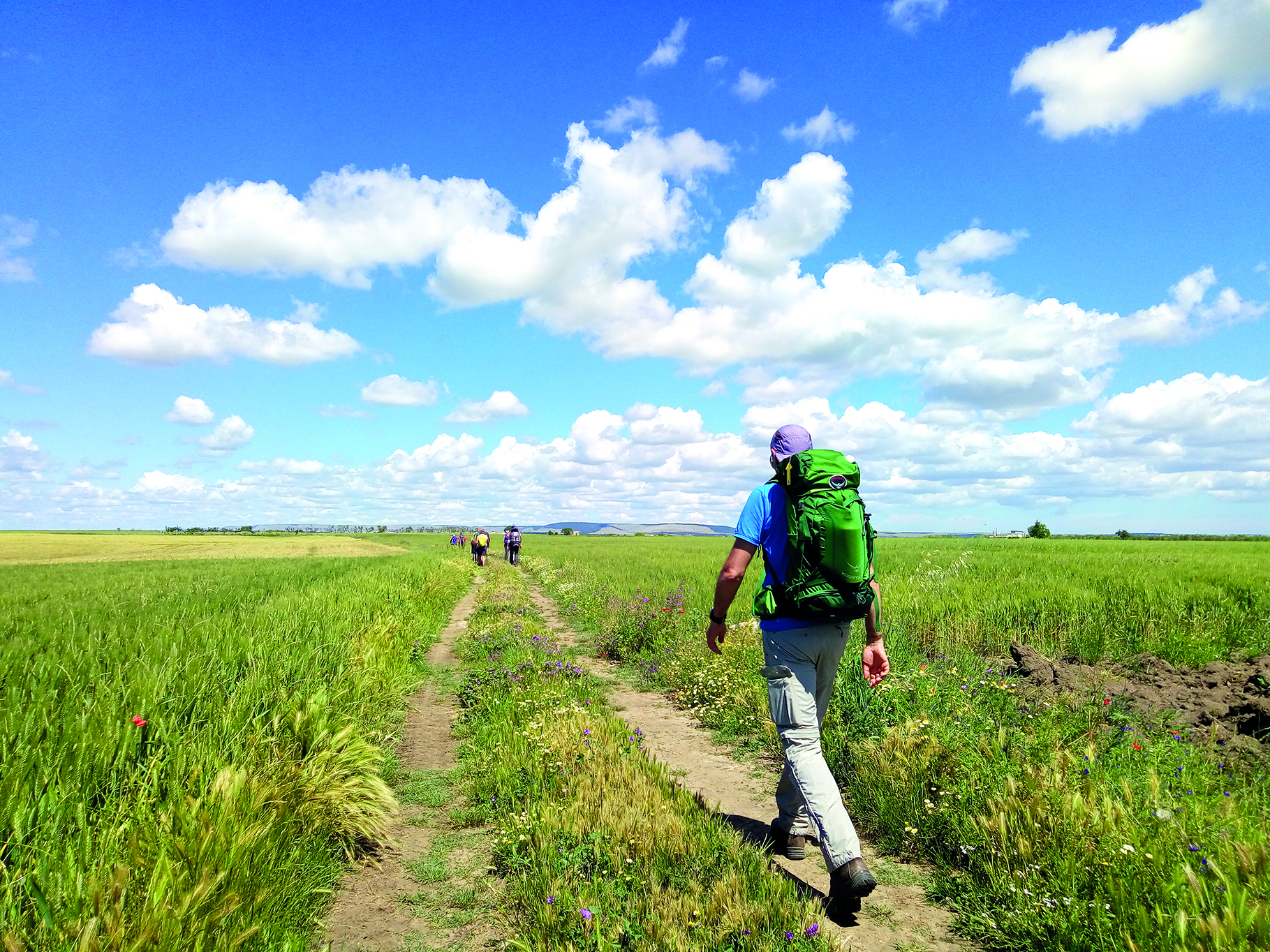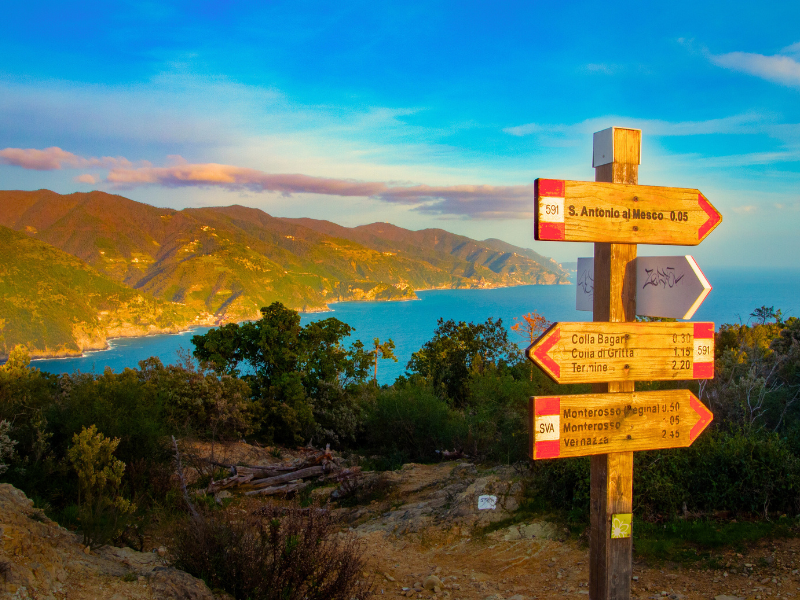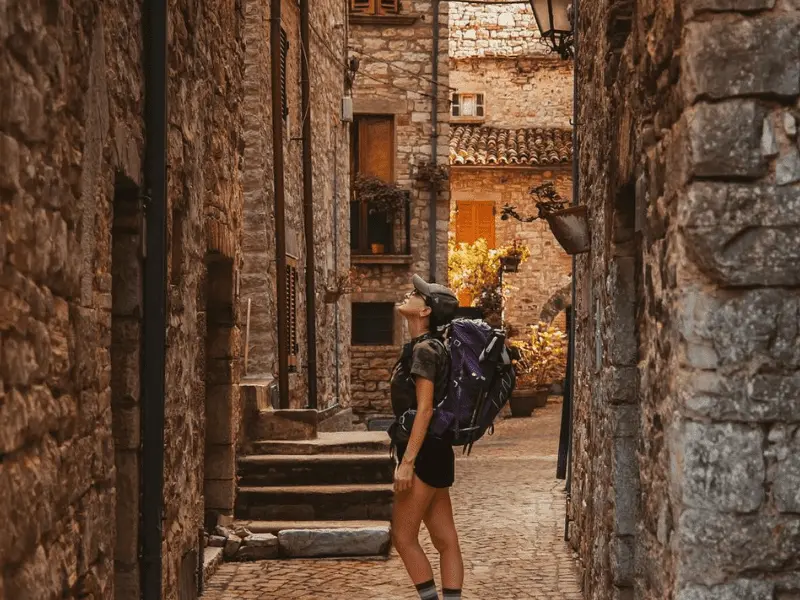


And here we are, again this year, for the sixth consecutive year, with the ranking of the 10 most searched Caminos on our portal. The data refer to 2025: the 10 most searched Cammini on camminiditalia.org totaled 280,189 views, or 14 percent of the more than 2 million total views of the site, which brings together more than 110 itineraries.
Introduction
Who’s in the rankings? The same names as last year, but in a slightly different order, with someone gaining positions. Quite a change, however, from 2020. In fact, only 3 out of 10 paths remained in the 2025 rankings: Via del Sale, Via degli Dei, La Rotta dei due Mari. On the other hand, making a comparison between 2020 and 2025, the top 10, which in the year of the pandemic was dominated by the Via degli Dei, Cammino CELESTE, and Via del Sale and included longer routes (partly because there was also perhaps more time available), such as the Parks Trail (over 7.000 km), the 100 Towers Trail (about 1,284 km) or the Via Francigena (nearly 11,000), in 2025 the list includes mostly shorter, compact and easy-to-plan paths, along with “experiential” and “area-based” itineraries. This may also mean that more and more people are also choosing to walk the paths out of season, organizing them around a long weekend or in winter.
The top three 2025 walks, which you will find scrolling toward the end of the article, cover as much as 44.4 percent (almost half!) of the top 10 views-and the first more than half, i.e., 64.7 percent-showing a growth in interest and polarization. We would like to make a clarification, making it easier to read the data: these are related to views on the site and may give an idea, but they do not accurately reflect the number of actual walkers.
Who is looking for walks? Identikit of a young and increasingly international community
Analyzing the demographic profile of those who browsed the portal in 2025, a picture emerges of substantial continuity from the previous year, but with very interesting signs of evolution.
Age: Millennials and the need for “compact times” win out
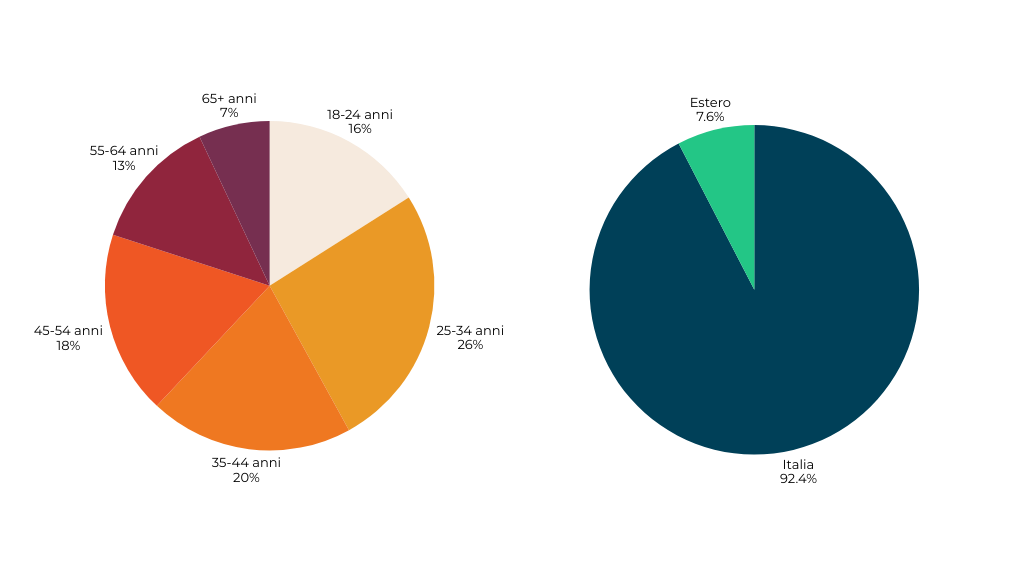
While in 2024 the 25-34 age group accounted for 25 percent of the audience, in 2025 this share consolidates and grows slightly to 26 percent. Together with the 35-44 age group (20 percent), these figures confirm that almost one in two users belongs to the generation in full working age. It is precisely this demographic data that explains the success of the “compact” walks (3-6 days) highlighted in the ranking: this is an audience that seeks the immersive experience, but has to wedge it between limited vacations and tight work rhythms. The presence of the very young (18-24 years old) is also stable at around 16 percent.
Provenance: Italy dominates, but foreign countries grow
Geographically, Italy obviously remains the main basin, but there is a slow and steady international opening. While in 2024 domestic traffic covered 94 percent of the total, by 2025 this share drops to 92.4 percent, leaving more room for foreign walkers, who rise to 7.6 percent. Among enthusiasts dreaming of Italy from abroad, the podium is led by Switzerland (0.93 percent), followed a very short distance by the United States (0.83 percent) and the United Kingdom (0.66 percent). This is an important signal for the territories, which must make themselves ready to welcome an increasingly global tourism.
During 2025 camminiditalia.org was also translated into English and Spanish. An implementation that will likely lead to an increased foreign audience on the portal in the years to come.
Ranking 2025
Below is the ranking of the 10 most visited Ways on our portal during 2025. A ranking whose protagonists remain the same as the previous year, but with a change in positions reflecting the preferences of those who walk them, related to seasonality (and the possibility of walking them also in autumn and winter), accessibility and logistics.
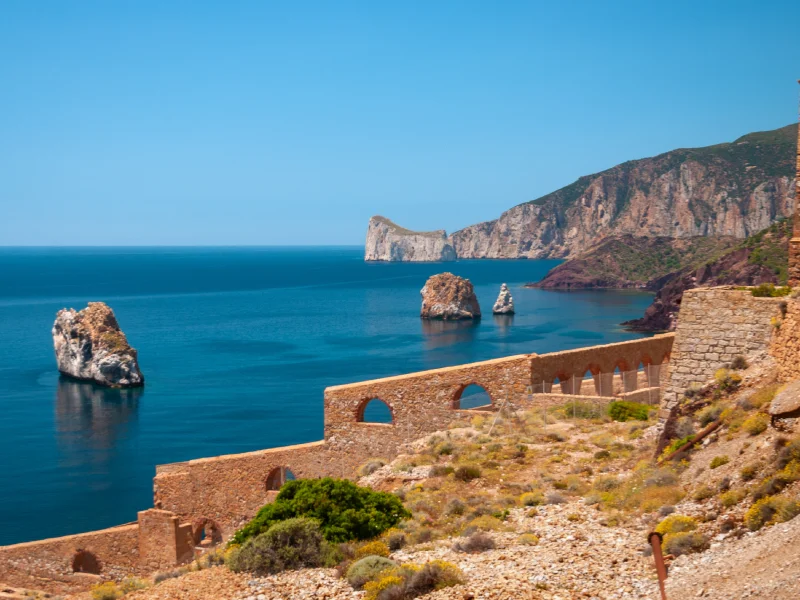
10. The Cammino Minerario di Santa Barbara, Sardinia
500 km loop in southwestern Sardinia, divided into 30 STAGES and run in all seasons, although we strongly advise against summer because of excessive heat. In 2025 the Cammino Minerario di Santa Barbara totaled 17,522 views. The Camino was created with the goal of rediscovering the ancient mining routes that miners used to travel to work or to transport materials. Only 25 percent of the Cammino runs on asphalt in urban and suburban centers, while the rest is on paths, mule tracks, cart tracks and unpaved cart roads.
The CAMMINO MINERARIO DI SANTA BARBARA has just won theGlobal Choice Award as “Best Trail in the World,” during the latest CMT trade show in Stuttgart. The first edition of the Award honored the Sardinian trail, which was in contention with prominent international finalists including the Trans Canada Trail, GT 20 Bike (Corsica) and Sauerland-Höhenflug (Germany).
Each year the Camino offers activities and discounts to attract new walkers: last year the invitation was to women, while in this 2026, to celebrate the victory and its 10 years, the Foundation has proposed 2 thousand nights in posadas and affiliated facilities at the symbolic cost of 10 euros. The vouchers will be available for those who choose to set out between February 10 and June 10 or between September 10 and December 10 this year.
09. Paths of Oropa, Piedmont
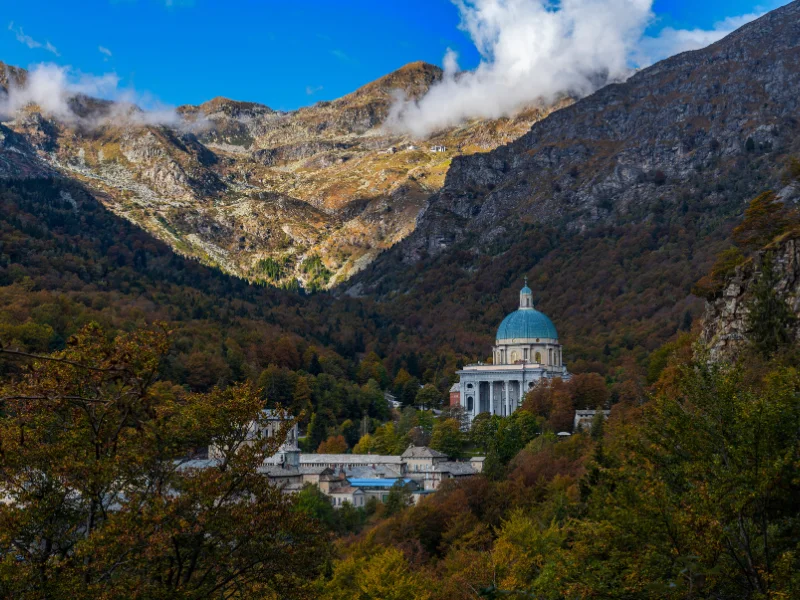
I three paths of Oropa totaled more than 19 thousand views (19,131) in 2025, a few less than last year.
The variant of the Cammino di Oropa della Serra – 62 km, which can be walked in 3 or 4 stages in all seasons, including by bicycle, from Santhià, in the province of Vercelli, to the Sanctuary of Oropa (Biella), crossing the Serra Morenica between the Eporediese and Biella areas-last year saw a +20% increase in wayfarers along the Cammino, confirming it as one of Italy’s most beloved. Perhaps also because of the simplicity in terms of logistics: the departure is from Santhià, just outside the station that connects the Turin-Milan route and is therefore very easy to reach. With its length it allows it to be walked during a long weekend in 3 or 4 days and lends itself very well to be tackled as a first walk.
This and the other variants-along with the Cammino di Oropa Canavesano, which begins in Valperga, in the province of Turin, 84.9 km divided into 5 STAGES and the Cammino di Oropa Orientale, from Vallemosso, 34.3 km in 3 STAGES – constitute a fascinating spiritual and naturalistic Piedmontese route. All routes lead to the famous Sanctuary, a UNESCO heritage site. The routes are passable from May to October and are suitable for those seeking tranquility, nature and ease of organization.
08. CAMMINO DEL GRAN SASSO, Abruzzo
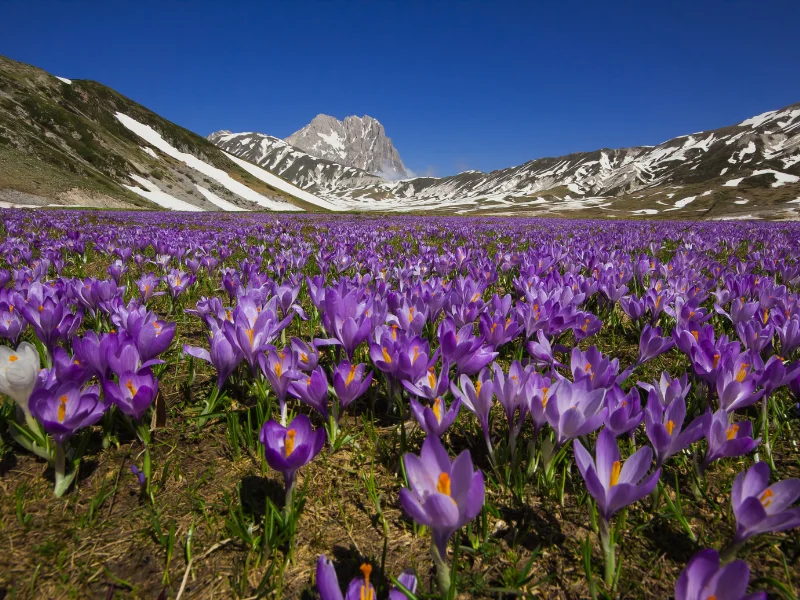
61 km, almost 3 thousand meters of total elevation gain, 5 stages on a loop route, ideal in spring, summer and autumn (to be monitored for snow on the first stage during spring and winter), this mountain walk loses a few positions compared to last year, but continues to garner a lot of curiosity, with 19,700 views. The Cammino del Gran Sasso, is designed to be usable by as many people as possible, and starts from Fonte Cerreto, at the base of the Gran Sasso cable car in the municipality of L’Aquila, passes through the breathtaking views of Campo Imperatore and Scoppaturo Canyon, then stops between the villages of Rocca Calascio, Santo Stefano di Sessanio, Barisciano, and then returns to the starting point.
Its success also tells of a need for those who choose to walk a path: to immerse themselves in nature and mountain environments. That of the Gran Sasso, a National Park established in 1991, remains to this day one of the areas with the greatest plant biodiversity in Europe, with about 2,300 species and a still wild nature, protected from the mass anthropization that has affected other mountain areas, which are attracting more and more people, as reported by the UNCEM 2025 Report, which tells of how these are repopulating.
This also happens thanks to walks that revive the territory and bring people back to experience these areas. Compared to the data collected by Cammini d’Italia, this interest in the mountains translates mainly into mountain routes that are not excessively long, as in this case or that of the Via del Sale, which we will find higher up in the rankings.
07. LA ROTTA DEI DUE MARI, Puglia
136 km, 6 STAGES, from Polignano a Mare to Taranto, passing through Castellana Grotte, Alberobello, Locorotondo, Martina Franca, Crispiano, is practicable (even by bicycle) in almost all seasons-we advise against summer, again, because of the heat-and connects, as the name suggests, the Adriatic and Ionian Seas, in the Gulf of Taranto. With continued growth since 2020, this path has reached over 20 thousand views on our site (20,366) in 2025. A +179% increase from 7,300 in 2020 and one position higher than 2024.
Walks like La Rotta dei due Mari become stronger because they intercept precise needs: routes that can be covered in shorter times, such as a week, clear and organized logistics, and travel periods untied from the summer. Like the Salento Trail, which we will see in a moment, this itinerary is in fact perfect to be tackled even during the winter season.
To learn more, you can catch up with our documentary in three episodes made by our team in 2023.
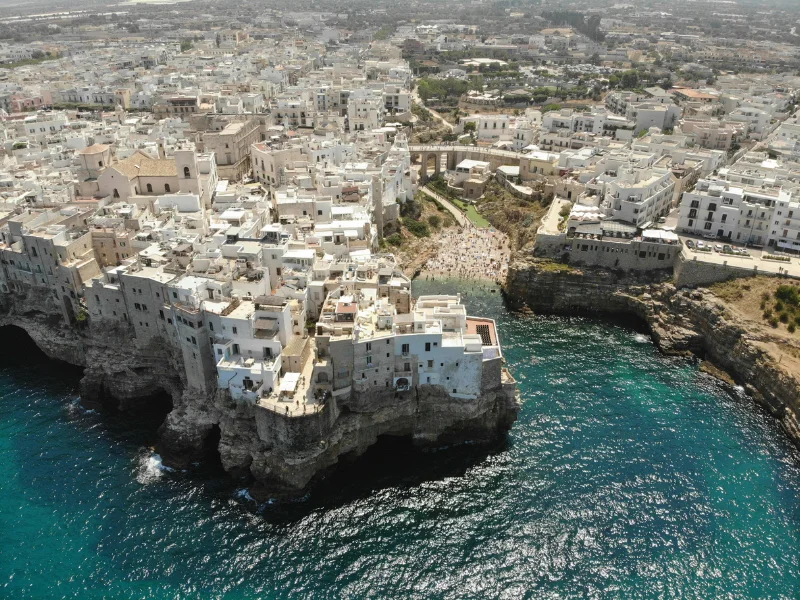
06. The Cammino del Salento – Via del Mare and Via dei Borghi, Puglia
With 114 km in 5 STAGES for the Way of the Sea and 135 km in 6 STAGES for the Via dei Borghi, we remain in Apulia for another linear Cammino, from Lecce to Santa Maria di Leuca, preferably walked between spring, autumn and winter. Entering the top 10 last year, The Salento Way has gained as many as 4 positions since 2024, with 22,248 views. Figures for 2025 speak of more than 4,500 Pilgrim’s Passports distributed, and 1050 testimoniums collected.
As with La Rotta dei due Mari and the Sanata Barbara Mining Trail, its success indicates a strong interest in walkable paths – and indeed, recommended! – even in cold seasons. Summer can be very hot and especially crowded. But why do more and more people seek walkable paths in winter? For reasons of climate, price, accommodation availability. And because this type of enjoyment is also growing during the holiday season, instead of the classic ski trip or travel abroad.
In spring and fall, it is the perfect itinerary to cool off or end a day’s walk with a swim in the crystal-clear sea-the bravest have bathed even in the middle of winter-and to enjoy the local culture and food and wine. And if you’re not a fan of crowds, it’s a great way to experience Salento!
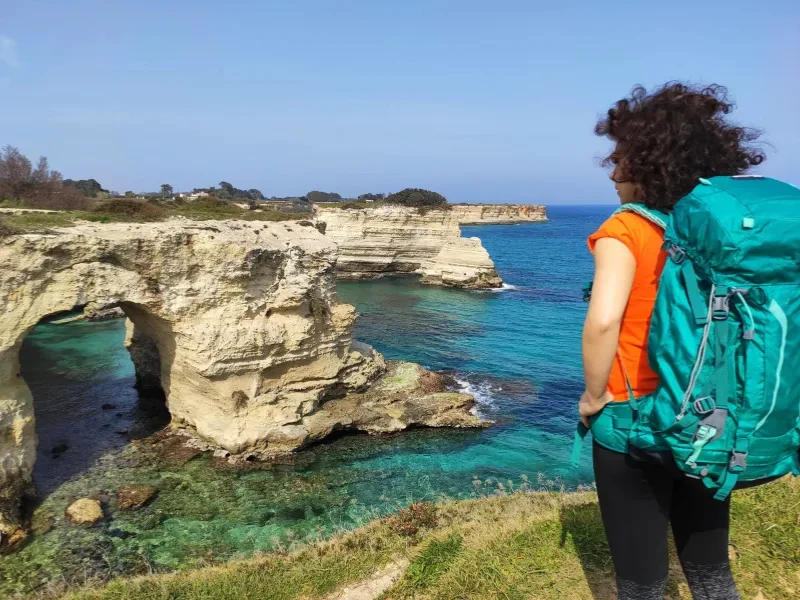
05. Kalabria Coast to Coast, Calabria
55.3 km, 3 STAGES from Soverato to Pizzo, from the Ionian Sea to the Tyrrhenian Sea, crossing the mountainous territory of the Calabrian Preserre, charming villages of Petrizzi, San Vito sullo Ionio and Monterosso Calabro, is recommended for travel in spring, summer and autumn. Like last year, when it entered the rankings, it scored about 26 thousand views (26,470) and gains in 2025 one position over the previous year.
Between sea and mountains, the Kalabria Coast to Coast is the perfect itinerary for those who want to explore the region in a relatively short time and traverse landscapes that alternate between olive groves, forests and ancient villages while staying off the more usual and crowded tourist routes.
To find out all the interesting facts related to this path, you can catch up with the YouTube video we made in 2022-the year, moreover, when the Camino was included by the prestigious Time Magazine in its list of “World’s Greatest Places”-the most beautiful places in the world.
04. Cammino dei Tre Villaggi, Lazio
With its 18 km, divisible into 3 STAGES, and with a loop route in the Tuscia Viterbese, it is the smallest walk in Italy, perfect to be completed in a weekend throughout the year, with a focus on summer because of the heat and mud during the rainier seasons. – Or, for those in a hurry, even in a day! In 2025 it lost one position, but still remains high with an impressive 30,439 views.
Starting and ending in Villa San Giovanni in Tuscia, passing through the villages of Barbarano Romano and Blera, the Cammino dei Tre Villaggi can be traveled on foot and by bicycle and winds through ancient Etruscan roads, offering an experience not only from a naturalistic point of view, among clay hills to woods and pastures and the gorges carved over the millennia by streams, but also from an archaeological one. Due to its easy logistics and short duration, this micro-hike proves perfect for those with little time, a small budget, or those who are new to the experience.
Yes, in 2024 we also made a documentary about the Cammino dei Tre VILLAGGI, and you can watch it here.
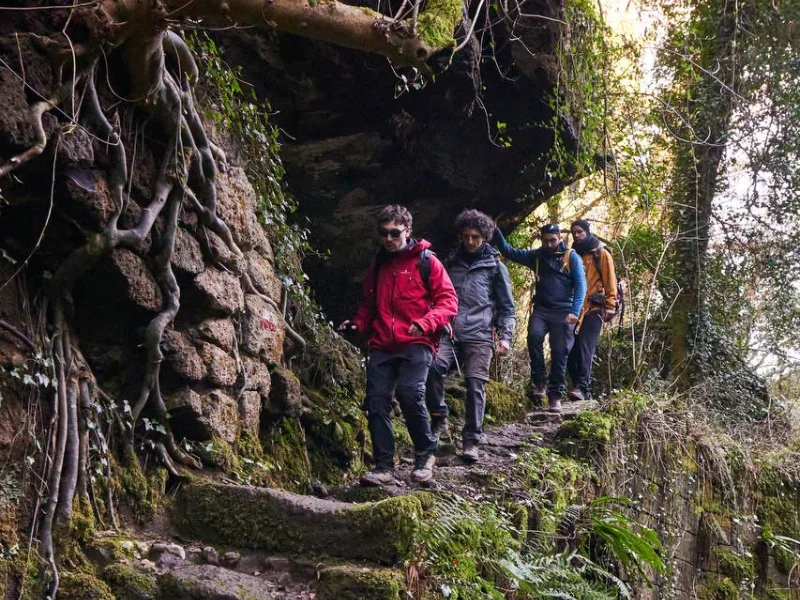
03. The Via degli Dei, Emilia-Romagna and Tuscany.
130 km, 6 STAGE, Italy’s most beaten path, after remaining in first place for a few years, the remains on the podium, but falls to third place, with 33,408 views.
Traversable on foot in 4-6 days, but also by bicycle in 2-3, all year round, but preferably from March and November, theVia degli Dei connects Piazza Maggiore in Bologna with Piazza della Signoria in Florence and follows an ancient Roman road, the Flaminia Militare. This dates back to 187 B.C., discovered in the woods of the Apennines by Caesar Augustine and Franco Santi. Along the path, whose recovery took place in the 1990s, stretches of Roman pavements can still be admired, evidence of a past rich in history, and it takes its name from the topography of the place: the mountains it crosses, in fact (Mount Adonis, Mount Luario, Mount Venus…) evoke divinities of antiquity.
The fact that it is among the busiest of the CamMINO DI DANTE routes does not mean that it is to be underestimated: it is essential to plan each STAGE carefully, as some exceed 30 kilometers with challenging elevation changes, especially in the second and last parts of the route, and in case of unfavorable weather, it can be challenging.
One of the most important news about 2025 is that it was the first walk in the world to be certified by the Global Sustainable Tourism Council, a body supported by the World Tourism Organization and the United Nations Environment Program. A recognition that the Via degli Dei meets standards of environmental, social and economic sustainability.
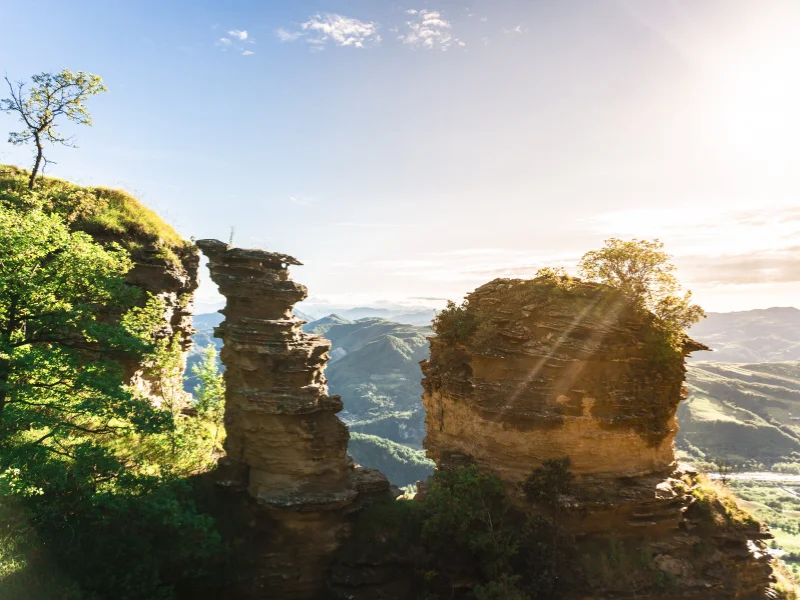
02. The Cammino dei Borghi Silenti, Umbria
90km can be covered in 4 or 5 loop stages, from Tenaglie to Tenaglie, along the Amerini Mountains of southwestern Umbria, on the border with Lazio: as the name suggests, it passes through a series of wonderful, sparsely inhabited medieval villages, such as Baschi, Santa Restituta, Toscolano, Civitella del Lago.
In the province of Terni and a stone’s throw from Orvieto, the Cammino dei Borghi Silenti is confirmed in second place: born in 2020, after a growth in popularity throughout 2024, this year it stabilizes on 37,595 visits on our website. Spring, summer and autumn are the best seasons in which to walk it to fully appreciate the Umbrian countryside, along with its colors and flavors, and the view of Lake Corbara.
Stages can be organized with distances between 20 and 25 km, and the overall elevation gain should not be underestimated: about 2,500 meters. With decent training, it is also perfect as a first walk, thanks to the very organized logistics.
How could we not make a documentary about this path as well? If you want to see it here it is… During the walk we had the great pleasure of meeting and chatting with Mogol, who lives on the Variante dei Ciclamini on the first STAGE.
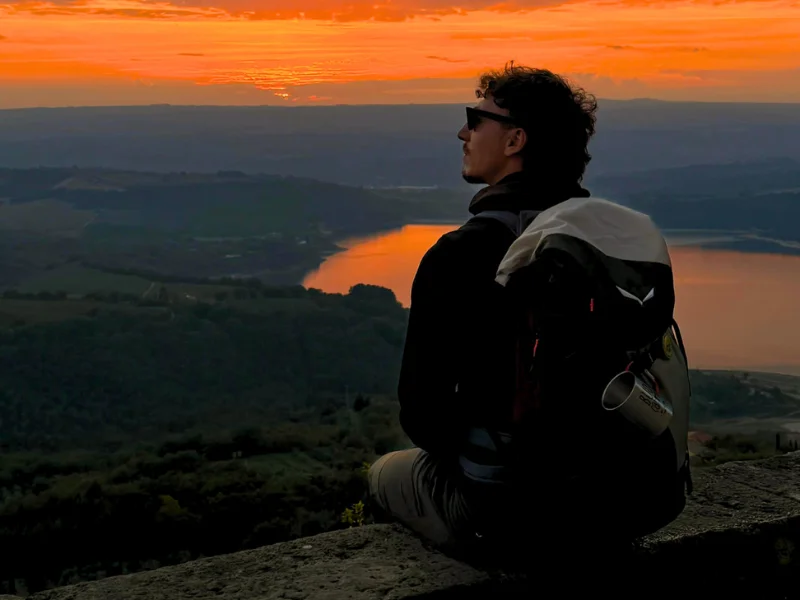
01. The Via del Sale, Lombardy, Piedmont, Liguria
The 87.2 km of The Via del Sale, which can be traveled in 4 STAGES, join Varzi, in Lombardy, to the Ligurian Sea, Portofino, crossing Emilia-Romagna and Piedmont, along the ancient routes used to transport salt produced in Genoa to the Po Valley.
In 2020, the Way was already on the podium, in third place, in 2024 it had dropped to fourth, and in 2025 it climbed them all, until it reached first, where the Via degli Dei was last year. From 22 thousand visits in 2020, it more than doubled, reaching 53,310 views in 2025 (a +142% increase). Further confirmation that nature walks, even at higher altitudes, are attracting more and more interest.
Walkable between spring/summer/autumn, but preferably between June and September, to avoid snow near mountain passes. The Cammino has a total elevation gain of about 3 thousand meters, which requires good athletic and physical preparation, and crosses Apennines and valleys to sea views.
Conclusions, analysis and trends
We have arrived at the sixth edition of the report: a ranking that allows us to better understand not only the habits, preferences and travel choices of our community, but also to observe the evolution of a phenomenon that continues to grow and structure itself-with a small boost also given by the Zalone effect perhaps, but which is not limited to a trend of the moment.
Thus, the most frequent searches would concern:
- Shorter paths with simpler logistics;
- Walks that can also be taken out of season and at different times of the year, avoiding traditional tourist flows;
- Walks that can offer experiences deeply connected to the territory, both in terms of nature, culture and gastronomy.
We will be better told by the 2025 data that will be shared by Terre di Mezzo in the coming weeks, but in general it is clear that, with well over 190,000 practitioners in 2024 and a positive trend compared to previous years, Italian caminos continue to grow as a tourist and social phenomenon and are confirmed as a travel and cultural experience capable of intercepting different needs: limited time available, desire to immerse oneself in natural environments, attention to cost, but also to authenticity.
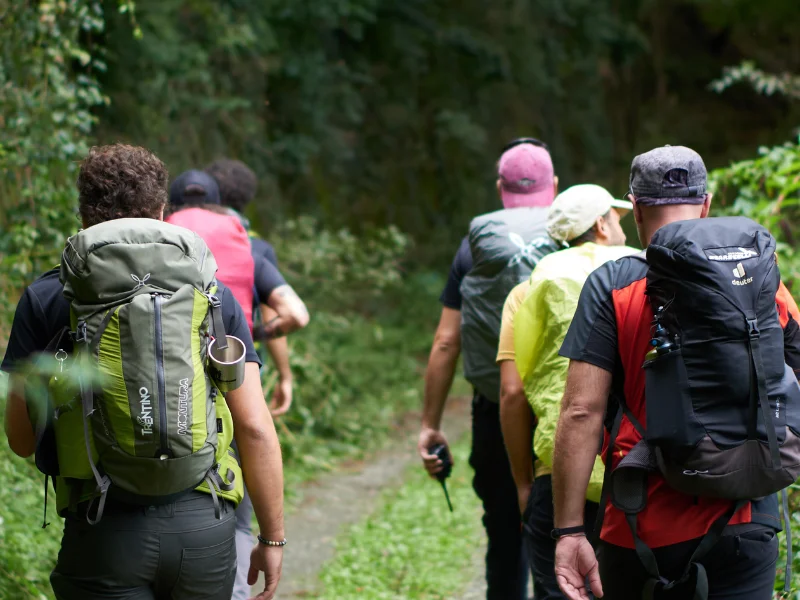
Not everyone can afford long itineraries or full weeks of travel, and this is one reason why short, well-organized walks are consolidating as an increasingly popular choice. As the numbers show, the most sought-after caminos have STAGES between 3 and 6 days, mileages between 50 and 140 km. Simple logistics (with many loop routes) and accessibility become central elements. Excluding the CAMMINO MINERARIO DI SANTA BARBARA, the median of the 10 most sought-after walks is around 90 km and 5 STAGE.
At the same time, another fact emerges strongly: there is growing interest in off-season walkable routes, especially in the South and along the coasts. Milder weather, less crowding, more affordable prices and greater availability of accommodation make autumn and winter increasingly attractive seasons-decisive levers as much as landscapes, places and food and wine experiences. For territories that receive walkers, this is especially important because it helps distribute tourist flows over time and space.
As the UNCEM’s Mountains Italy 2025 Report., slow tourism is part of a broader transformation of the way of inhabiting and crossing territories. In this way, the paths become not only tools of discovery, but also opportunities to relate to local communities. More and more often, it seems to emerge from the data, the choice of a path stems from the territory, even before its spiritual or symbolic dimension that drove the narrative in the past. Here the most sought-after names are those of Paths that wind through coastal and mountain landscapes, villages, precise geographies – and that are presented in their possibility of offering experiences linked to the territory.
The new Italian law on Cammini, approved on Feb. 10, 2026, provides for an allocation of 5 million euros for the three-year period 2026-2028, and one million per year from 2029, which will be added to the approximately 30 million already invested by the Ministry of Tourism so far to survey and promote the network of Italian Cammini. The text defines Italy’s Cammini as “routes to be experienced slowly, on foot or by other means of sustainable soft mobility, without motors, with the aim of bringing out and enhancing their cultural, historical, religious, naturalistic and hiking aspects.” The objectives, the Minister of Tourism specified, “include safety, hospitality, slow tourism, dissemination, local traditions, historical sites, linguistic minorities, thematic insights, intercultural dialogue and environmental protection.” This is an important signal for the enhancement of the future of our country’s Caminos.
Top 10 by views
| # | Walk | Views | Share on Top 10 |
| 1 | Via del Sale | 53.310 | 19,0% |
| 2 | Cammino dei Borghi Silenti | 37.595 | 13,4% |
| 3 | Via degli Dei | 33.408 | 11,9% |
| 4 | Cammino dei Tre Villaggi | 30.439 | 10,9% |
| 5 | Kalabria Coast to Coast | 26.470 | 9,4% |
| 6 | Cammino del Salento | 22.248 | 7,9% |
| 7 | La Rotta dei due Mari | 20.366 | 7,3% |
| 8 | Cammino del Gran Sasso | 19.700 | 7,0% |
| 9 | Paths of Oropa | 19.131 | 6,8% |
| 10 | Cammino Minerario di Santa Barbara | 17.522 | 6,3% |